Monday, 1 February 2016

Nursery head for the stars

Pupils from the Brambletye Nursery found out about rockets today when two Year 8 girls visited from the Prep school. Nursery have been learning about the planets in our solar system.

The two Year 8 girls have already been accepted into their senior schools having successfully completed scholarship exams.
They demonstrated water rockets to the Nursery children.
The bottles are filled one third full of water
and then pumped with air.
Once the bottle has enough pressure the pump nozzle pushes out and .....
the bottle flies into the air. 

A message from Tim Peake

The Brambletye Science department has signed up to help Tim Peake with an experiment using seeds he has taken to space. Here is a message we received from the rhs today:

Good afternoon Rocket Scientists!

 Thank you again for signing up to Rocket Science, we hope you are looking forward to taking part.

 Our rocket seeds are still due to come back to Earth in March and we will be sending them out to you after the Easter holidays so sit tight! We will let you know nearer the time what day they are likely to arrive so you know to look out for them.

In the meantime, we have a very special message to everyone from Tim himself, up on the International Space Station! The message is to encourage more people to join the project but we thought you might like to see it too!

 To watch the message head here: https://www.youtube.com/watch?v=7OgSJKqDRFk Be sure to watch it with your pupils!


Tim will also be sending out some special photos on his Facebook and Twitter pages so help us spread the message by sharing and retweeting the photos if you can.


Happy viewing J

Best wishes,

The RHS Campaign for School Gardening Team

Friday, 29 January 2016

Year 8 work on owl pellets

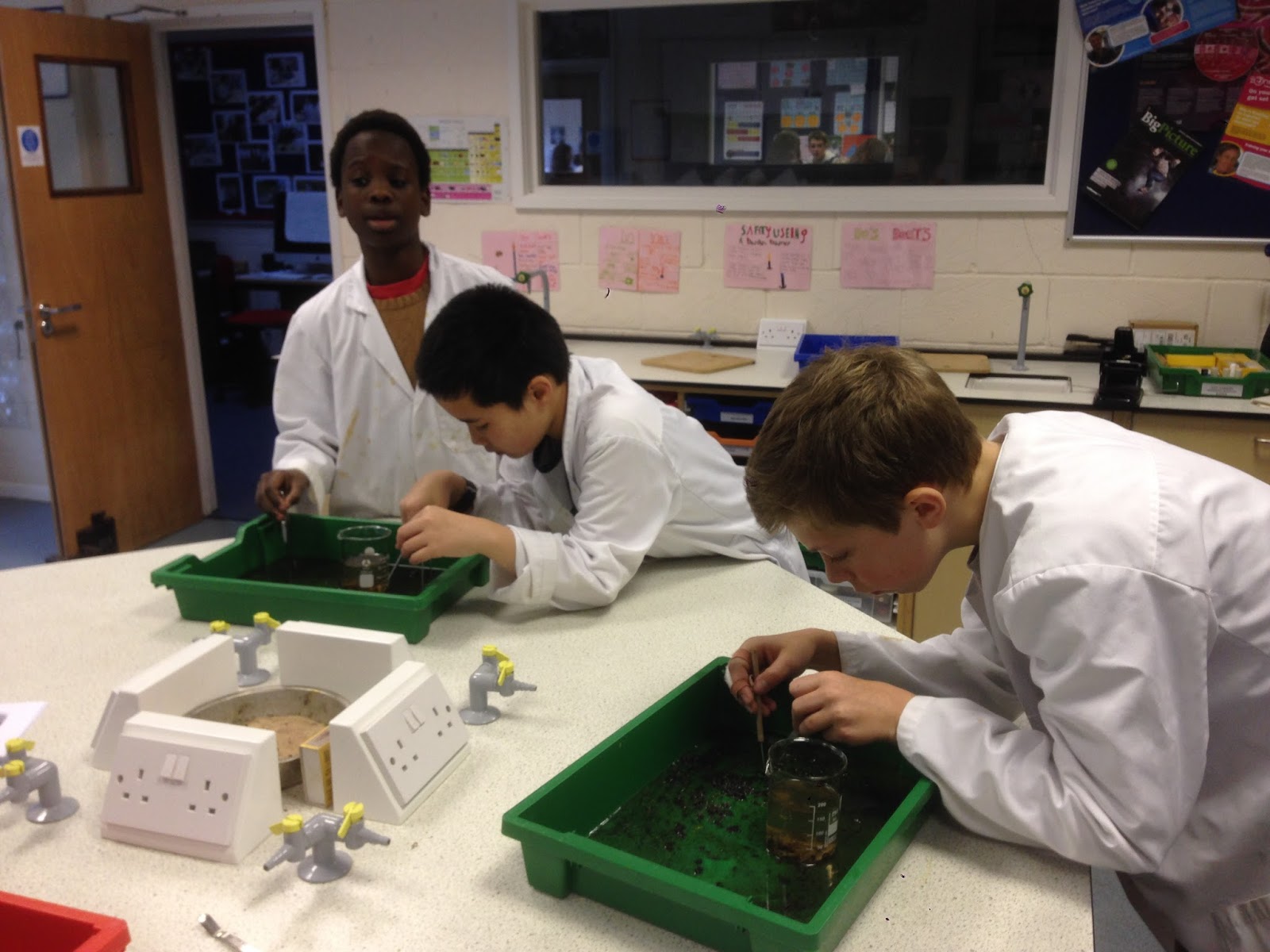
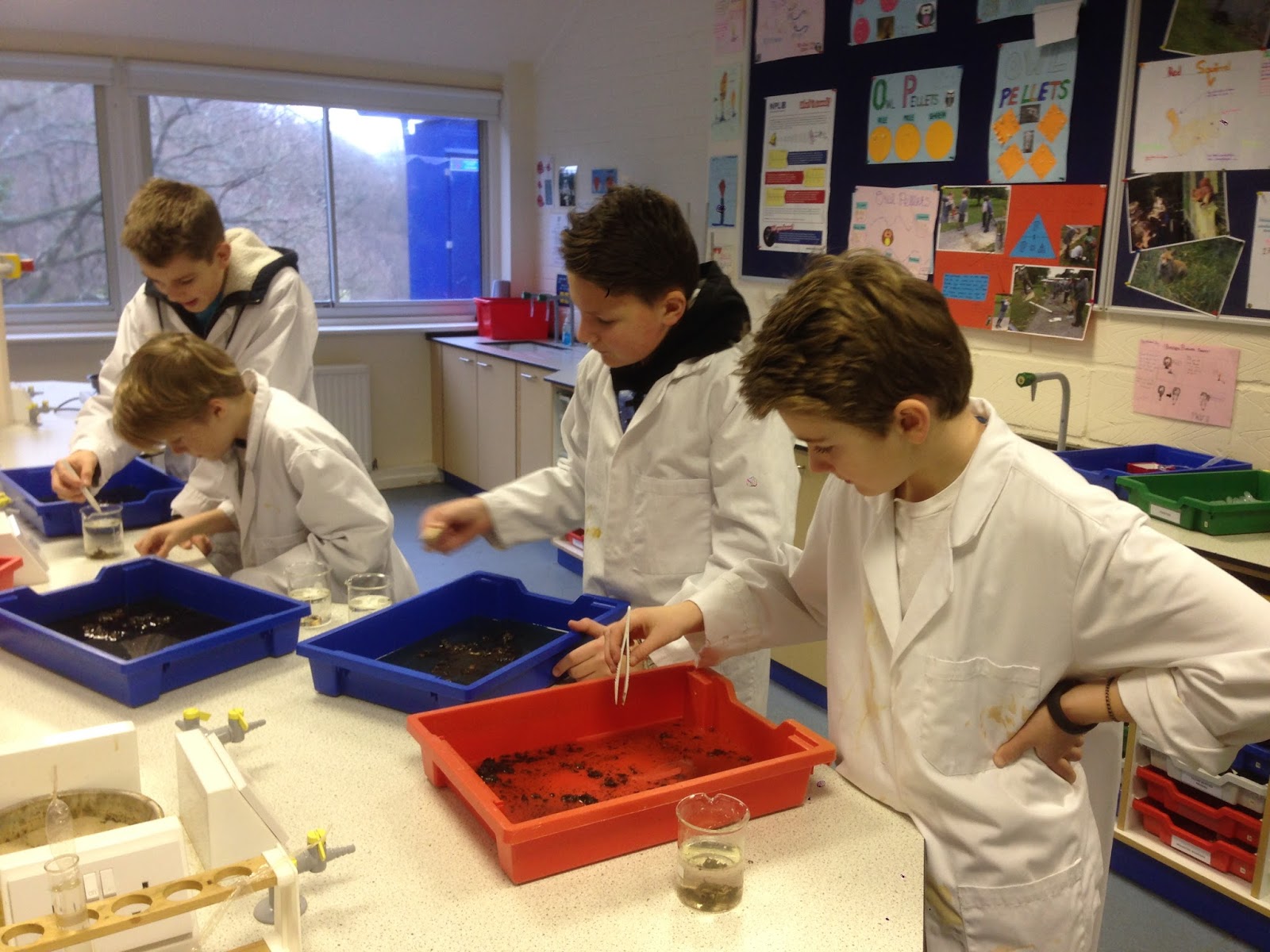
Year 8 have been dissecting owl pellets. This will help them to know what the owl has been eating.
 The owl pellet is made of the bones and fur that the owl has swallowed
The owl coughs up these pellets rather than them going through the whole digestive system 
The pellets need soaking so they can break apart easily 
 Then the bones need to be separated from the fur
and washed  
Careful work is required so the delicate bones are not broken.  
The bones will now be soaked in bleach solution 
This cleans up the bones and kills any bacteria on them.

Thursday, 28 January 2016

Testing a BigMac

Today 7C started their new topic Digestion and Nutrition with an experiment to test a BigMac for nutrients.
The BigMac was split into its component parts
so they can be tested
Testing with sodium hydroxide and copper sulphate 
to see if there is any protein 
Care must be taken with the sodium hydroxide, a strong alkali, as it is corrosive.
Using ethanol to extract the fat from food 
once filtered the solution will  
turn cloudy when drops of water are added
if it contains fat. Then record the result
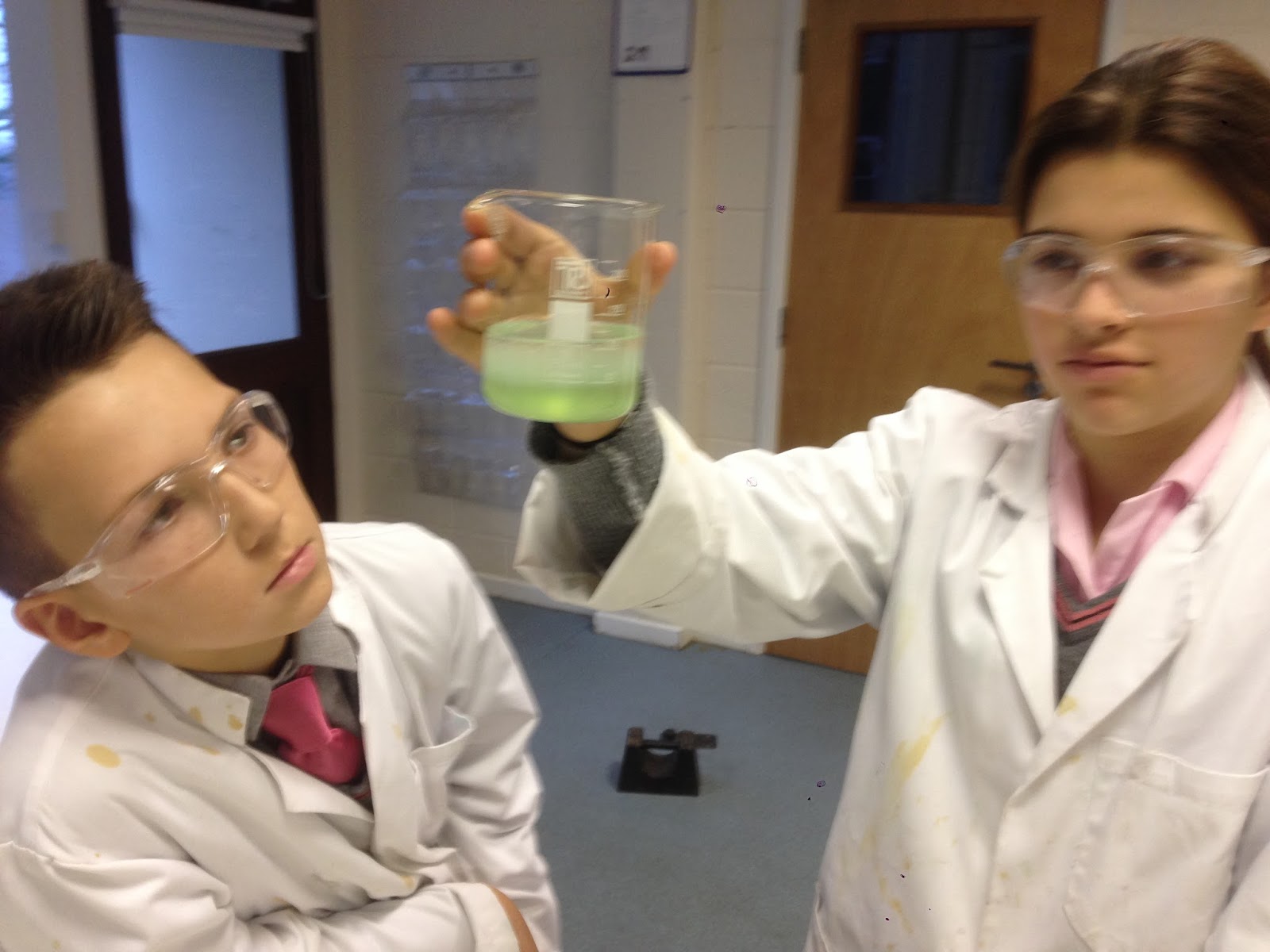
 Iodine shows the presence of starch by turning from orange, brown to blue, black
 Benedict's solution turns from blue to green, orange or red if there is glucose in the food.
Lots of accurate testing 
means we now know......
 
Well, you will have to wait for the final report. 


6S on microscopic safari

6S used their newly gained microscopy skills to look for single celled organisms in a moss clump
you can follow this link to see a short film on vimeo

Protoctista from Brambletye on Vimeo.

It was taken by pointing an iPhone down a microscope. My apologies for the not brilliant quality but I hope you find the subject matter interesting.

Wednesday, 27 January 2016

Year 7 Examine DNA

Not quite Silent Witness but we have extracted the DNA from an onion during our work on reproduction.
First get your equipment ready 
and read the instructions 
 
mix the onions with salt water
 
and grind together to crush the cells and dissolve the DNA 
the more its ground the better 
 
Then we need to filter the insoluble onion out of the mixture
We use cloth to filter the insoluble bits
The residue stays in the filter funnel 
The filtrate passes through into the measuring cylinder
 
We have to collect 50ml


Then we add washing up liquid to the filtrate 
this must be stirred in carefully as we don't want any froth
One class recorded their experiment photographically using the ipad 
Careful mixing
 
Just one spoonful


Now we need cold ethanol
This must be poured in carefully 
down the edge of the beaker
 
so that the ethanol floats on top of the solution
 if you are careful enough
then you get two distinct layers 
with a sort of white fluffy boundary 
this white stuff is the DNA 
which looks stringy 
well there is about 1m length of it in each cell! 
The DNA is the middle layer here